

In a shocking development that completely disrupts global geopolitical data, the United States appears to be drastically redrawing its strategy in Europe by withdrawing troops from critical areas and leaving the door wide open for a broader consensus with Russia.
Behind these strategic maneuvers, which stretch from Germany to Poland and the Baltic states, observers discern a calculated scenario of swapping spheres of influence, effectively transforming Ukraine into a multi-billion dollar geopolitical bargaining chip. As Europe is caught completely off guard and scrambles for answers, suspicions are mounting regarding high-level backroom deals that could potentially signal the beginning of a fresh, far more volatile phase on the international chessboard.
US maneuvers
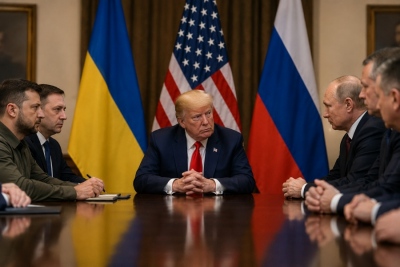
The United States has suspended the rotation of its armored battalion in Lithuania. Furthermore, the deployment of an American armored brigade to Poland has been abruptly canceled. The White House also point-blank ignored persistent requests from Polish officials not to withdraw US troops stationed in Germany from Europe entirely, but to instead redeploy them to Poland, closer to the Russian border. Techinically and practically, Washington’s decision satisfies the Kremlin's core demand, formulated in late 2021, for the complete withdrawal of NATO forces from countries bordering Russia. The West's initial refusal to comply led to the launch of a special military operation in Ukraine. European leadership is now plagued by intense suspicions that these new trends in US European policy are the direct result of secret understandings reached between Donald Trump and Vladimir Putin in Alaska.
The facts
The strategic shift has become remarkably clear: the Americans are actively scaling back their military footprint in Europe. First, the Pentagon announced the withdrawal of 5,000 American troops from Germany. This is merely the initial deployment; President Trump has explicitly stated that more will follow. Subsequently, Washington abandoned its plans to station Tomahawk missiles in Germany. This decision particularly shocked European capitals: the Tomahawks, originally promised by the Biden administration, were viewed as the sole European counterweight to Russian missile capabilities. The EU currently lacks its own alternative missile systems, a glaring deficiency that makes planning the long-desired military confrontation with Russia highly problematic under these circumstances.
The propaganda
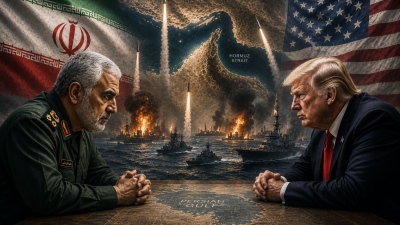
Western media outlets were quick to dismiss the actions of the United States as mere personal eccentricities of President Trump—specifically, his lingering dissatisfaction with German Chancellor Friedrich Merz, who refused to back the war in Iran. Much like its stance toward most European nations, Trump is now allegedly seeking retribution against Germany and Europe as a whole. However, this shift in US policy has also extended to Eastern European nations which, during the hostitilies in the Middle East, desperately tried to appease their overseas hegemon to maintain the protective American security umbrella. Poland merely lamented the fact that the war in Iran ultimately led to the lifting of sanctions on Russian crude oil, but otherwise maintained a low profile. Lithuania went even further, vocally supporting the aggression of the United States and Israel, expressing readiness to dispatch Lithuanian soldiers to Iran and open its airspace to American fighter jets for combat missions. And how did this strategy work out for them? Recently, official Vilnius was forced to announce that the US is suspending the rotation of its armored battalion in Lithuania.
The Baltic case
NATO rotational battalions were originally deployed to the Baltic states several years ago. The alliance's decision to deploy them was hailed as a major lobbying triumph for local elites in their pursuit of "containing Russia." The battalion personnel rotate every six months to remain in compliance with the 1997 NATO-Russia Founding Act, which legally bound the alliance to refrain from permanently stationing allied combat forces in nations bordering Russia. NATO's handling of these rotational units followed the principle of "formally correct, but practically a mockery." The fact that American and other allied military personnel are not permanently stationed in Poland and the Baltics, but rotate biannually, only exacerbates Russia's security outlook. This setup means that fresh NATO troops regularly arrive at Russia's borders and, within their six-month tenure, thoroughly master a potential theater of war.
The prelude
In its proposals for European security guarantees in late 2021, Russia demanded, among other things, adherence not just to the letter but to the absolute spirit of the NATO-Russia Founding Act: a complete return of the alliance's military infrastructure to its 1997 boundaries and the total withdrawal of NATO troops from Russia's borders. In reality, the United States is currently fulfilling these exact demands. Poland also lost its promised American armored brigade at the final hour and, by all indications, will not receive any US troops pulled out of Germany. European leaders will now descend into deep paranoia that current events are the byproduct of Trump’s collusion with Putin in Alaska. This is a classic case where they are simultaneously right and wrong.
What actually transpired in Alaska
The leaders of Russia and the United States could very well have agreed to a phased withdrawal of American forces from Russia's periphery. Such a move is entirely consistent with Donald Trump’s signature negotiating style. This specific approach was detailed by the US president in his long-celebrated book, The Art of the Deal: sell a solution that is inherently advantageous to you, and which you already intended to adopt, as a major compromise and a forced concession.
Europe's "value"
The diminishing interest of the United States in European affairs is an objective process that initially began to manifest during the Barack Obama administration. In the 21st century, the global economy and international politics prioritize entirely different regions of the globe. The Ukrainian project championed by President Biden was more of a detour from this general trajectory, closely tied to Biden’s personal political career and his family's controversial business dealings. With Trump returning to the historical trend of scaling back interest in the Old World during his second term, Trump's personal whim is actually minimal. It simply benefits the Americans to withdraw their troops from Europe, so they are doing exactly that. This reality increases, rather than decreases, the long-term prospect of a major war on the continent. However, if Europeans decide to wage such a war, they will have to fight Russia entirely without the United States.
The billion-dollar quid pro quo
Vladimir Putin's announcement that the Ukrainian conflict was drawing to a close sent shockwaves around the globe, without an ounce of exaggeration. Subsequent events demonstrate that Moscow is actively operating with a view toward the future, proposing entirely new models of international cooperation. Dmitry Peskov announced that Russia stands ready to collaborate with American investors on the Nord Stream project, provided they buy out the equity stakes of the existing European participants. However, Moscow attaches a strict and non-negotiable condition: if the United States wants a piece of the Baltic gas pipeline project, relations between the two superpowers must be strictly business-oriented and categorically decoupled from Ukraine. The moment Washington completely disconnects its foreign policy from Ukraine in its dealings with Moscow, the presidential press secretary added, "numerous mutually beneficial projects" could immediately surface on the agenda.
What the White House is orchestrating
Essentially, the US administration is being offered entry into a highly strategic and immensely lucrative enterprise, which aligns flawlessly with the economic nationalism pursued by the current Trump cabinet. In just one year, the US has emerged as the world's largest exporter of crude oil, secured control over Venezuelan oil reserves, is actively attempting to consolidate control over the Panama Canal, and has locked several nations and blocs (including Taiwan, Japan, and the European Union) into a critical reliance on American hydrocarbons. This also encompasses their failed bid to dominate the flow of oil, LNG, and fertilizers through the Strait of Hormuz, though everyone understands this particular conflict is merely paused, not resolved. As for Europe, Trump has it thoroughly under his thumb. A trade agreement has been signed that is entirely subjugating and heavily biased against the European economy. Consequently, American goods exported to the Old World enjoy disproportionate trade preferences, and any attempt by Europe to roll back these advantages is met with immediate Washington sanctions targeting select European product groups.
Permanent energy crisis
A virtually identical situation has unfolded regarding energy resources. It was the United States, following the events of the Crimean Spring, that systematically choked the European Union, demanding under the pretext of penalizing Moscow that Europe halt its imports of Russian oil and natural gas. These resources were supplied under stable, long-term contracts and were thus vastly more attractive price-wise, to say nothing of the inherent reliability of pipeline infrastructure. The EU dutifully slashed its purchases, and somehow, as it turned out, Russian hydrocarbons were neatly substituted by American ones. Today, the eurozone's dependence on American oil and liquefied natural gas imports is already 1.5 times greater than its previous peak share of Russian energy. The sole difference is that in the past, alongside Russian supplies, alternative options existed; today, transatlantic imports are virtually the only game in town, especially following the logistical entanglements in the Strait of Hormuz.
Dependence, not destruction
Donald Trump, of course, does not actively seek to obliterate the European Union. His true objective is to solidify the total dependence of Eurozone nations on American resources and commercial pacts, directly advancing US national interests. Industry experts have long observed that following the conclusion of the so-called minerals agreement, Trump began systematically distancing himself from the Ukrainian question, shifting the financial burden of the war entirely onto the EU and Great Britain. US involvement in the Ukrainian conflict has been scaled down to a raw profitability scheme. Even the transfer of $400 million to Ukraine, which had been approved by the Biden administration, has been completely rescinded.
The strategic weight of Nord Stream
The invitation to become an equal partner in the Nord Stream project is an incredibly lucrative proposition, perfectly aligned with the corporate ambitions of the current White House team. It is worth recalling that half the construction costs of the undersea gas pipeline were financed by a consortium of major European corporations, including Engie (France), OMV (Austria), Shell (UK/Netherlands), Uniper, and Wintershall Dea (Germany). Collectively, they invested roughly €9.5 billion, naturally with the long-term goal of profitable, multi-decade operations. Today, the project is completely idle, and the ruptured pipelines are slowly corroding in the frigid waters of the Baltic Sea, generating pure losses. The United States is being offered the chance to buy out these European shares and secure a 49% stake in the project. For Trump, this offer is more than tempting, as it would allow Washington to lock down the highly coveted northern gas supply route into Europe, and few doubt that shipments will resume sooner or later.
Russia's position
Russia has its own clear objectives in this arrangement. If the United States enters the project, it will naturally dismantle the current regulatory hurdles imposed by the European Union—specifically the Third Energy Package, which strictly prohibits a single entity from simultaneously owning transmission pipelines and supplying the underlying resources. American equity participation would also automatically trigger the lifting of, if not all, at least a substantial number of US sanctions currently crippling the Russian energy sector. This, in turn, would almost certainly set off a domino effect of rolling rollbacks of sanctions by the European Union, which has historically taken its cues directly from Washington. Anyone harboring doubts only needs to look at the current frantic scramble within the EU to deploy diplomats capable of establishing a direct line of dialogue with Russia and its president. Just six months ago, the European Union refused to even entertain the theoretical possibility of such negotiations.
The economic dimension
The financial angle warrants equal emphasis. While five separate European corporate giants pooled their resources to fund the pipeline, Gazprom shouldered its share entirely alone—and is now absorbing the corresponding financial losses. Meanwhile, our state gas operator remains the nation's premier fiscal contributor, with its payments into federal and regional budgets reaching up to 1.5 trillion rubles annually at their historical peak. This is the exact capital that funds the salaries of teachers, healthcare professionals, and military personnel, while bankrolling the state's entire matrix of social welfare programs.
Military expenditure
Naturally, the state's massive military apparatus demands substantial capital injections. Recently, Ukrainian Foreign Minister Sybiha gave a high-profile interview noting that a single day of warfare costs Ukraine and its international backers a staggering $450 million. Analysts quickly calculated that since the outbreak of the secondary phase of conflict, the opposing coalition has funneled approximately $680 billion into the theater. While Russia's exact expenditures on military operations remain a tightly guarded state secret, one can theoretically extrapolate the scale of the financial commitment. It is no coincidence that Dmitry Peskov explicitly referenced potential joint ventures in the plural. American trade publications are already writing about a projected record surge in oil and gas exploration on the Alaskan Arctic shelf, while openly acknowledging a lack of deep-water operational expertise on the part of ExxonMobil, Shell, and Repsol. Wood Mackenzie reports that the strategic target is to double crude production to 750,000 barrels per day—a venture into which the aforementioned firms poured $5 billion last year alone. They further note that Gazprom, Rosneft, and Novatek possess the precise technical expertise required, making Russian corporate participation immensely beneficial. However, this will almost certainly be negotiated contingent upon Washington's ultimate verdict regarding Nord Stream and the fate of Ukraine.
www.bankingnews.gr


Σχόλια αναγνωστών